First Halloween Font: Sweet Handwritten Charm for Crafters
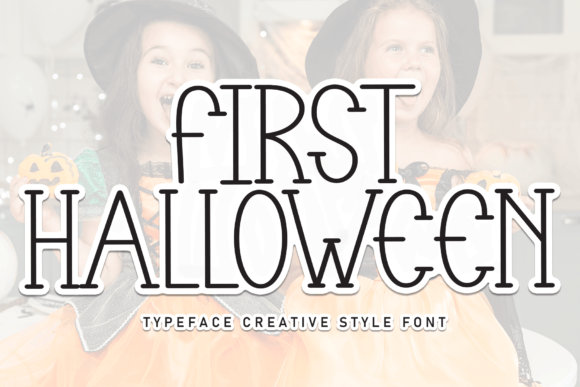
As someone who designs printable wedding invites, hand-stamped candle labels, and seasonal SVG bundles for Etsy, I’m always hunting for display fonts that feel personal *and* hold up in production. That’s why First Halloween has become one of my go-to script fonts—not just for October, but year-round. It’s a sweet, friendly handwritten display font from Script Amp, designed with crafters in mind: soft curves, open spacing, and just enough bounce to feel joyful without sacrificing readability.
What makes First Halloween special isn’t just its name—it’s how it behaves on physical products. Unlike overly ornate scripts that vanish when cut at ¼ inch or blur on matte sticker paper, this font keeps its warmth even at small sizes. I’ve used it for 0.3” boutique gift tags, 5” farmhouse-style welcome signs, and 8.5×11” printable wall art—and every time, customers comment on how “inviting” and “genuine” the text feels. That emotional resonance matters. When your handmade soap label says “Oat & Honey” in First Halloween, it doesn’t just list ingredients—it whispers care, craftsmanship, and charm.
Here’s where it shines in real projects:
- Wedding stationery: Use it for names on save-the-dates, monogrammed napkin prints, or rustic wooden cake toppers—always pair with a clean sans serif (like Montserrat or Poppins) for addresses and details.
- Product packaging: Works beautifully on candle jars, bath bomb wraps, and tea tins. Its gentle contrast helps text pop against kraft paper or pastel backgrounds without competing with illustrations.
- Digital printables: Planner stickers, habit trackers, and printable quote cards gain instant personality with First Halloween as headers—especially when layered over watercolor textures or subtle grain overlays.
- Cricut & Silhouette projects: The font cuts cleanly at 0.25–0.5” heights thanks to balanced stroke weight and generous letter spacing. No fragile terminals or overlapping swashes to snag on vinyl weeding tools.
- Seasonal merch: Yes, it’s named First Halloween, but don’t box it in. I’ve used it for “You’re My Person” mugs, “Hello Spring” tote bags, and “Just Married” confetti banners—all with consistent brand warmth.
Readability is where many handwritten fonts falter—but First Halloween avoids common pitfalls. Lowercase “a”, “e”, and “s” are distinct, not stylized into ambiguity. Uppercase letters have clear entry/exit strokes, so they remain legible when laser-etched onto wood or foil-stamped on cardstock. For printed greeting cards, I recommend using it for headlines and short phrases only (no full paragraphs), then switching to a highly legible serif or sans serif for body copy. That pairing strategy—First Halloween for voice, something neutral for function—keeps designs balanced and commercially smart.
Font pairing is intuitive here. Try First Halloween with a warm, low-contrast serif like Playfair Display for vintage-inspired invitations—or with a friendly geometric sans like Nunito for modern baby shower bundles. Avoid pairing it with other high-contrast scripts or overly decorative typefaces; its strength is approachability, not complexity. And if you’re building a cohesive brand kit, use First Halloween consistently for signatures, product names, and callouts—then stick to one supporting font across all assets. That consistency builds recognition faster than any logo alone.
Before downloading, check what’s included: First Halloween comes with standard OpenType features—ligatures for smoother “fi”, “fl”, and “ff” connections, plus stylistic alternates for playful variation (think bouncy “y” tails or lifted “t” crossbars). It supports Latin-based languages and exports cleanly as .OTF and .TTF files—ideal for Canva, Cricut Design Space, Silhouette Studio, and Adobe apps. No web font files are needed unless you’re adding it to a shop site banner; this is first and foremost a *craft font*, built for tangible output.
One practical note every seller should know: First Halloween includes an extended commercial license through Script Amp. That means you can use it to create and sell physical products (stickers, mugs, apparel), digital downloads (printables, Canva templates, SVG bundles), client work (custom invitation suites), and even merchandise with your own branding. Just avoid reselling the font file itself or embedding it in editable web templates where buyers could extract it. As long as your end product is transformed—text set, arranged, layered, and finalized—you’re covered.
I keep First Halloween in my top font folder not because it’s trendy, but because it delivers: it looks handmade without looking amateurish, feels festive without feeling fleeting, and performs reliably whether I’m printing 500 wedding menus or cutting 200 holographic cupcake toppers. In a market flooded with generic “cute” fonts, First Halloween stands out by balancing authenticity with utility—and that’s exactly what handmade sellers need to build trust, stand apart, and grow.